
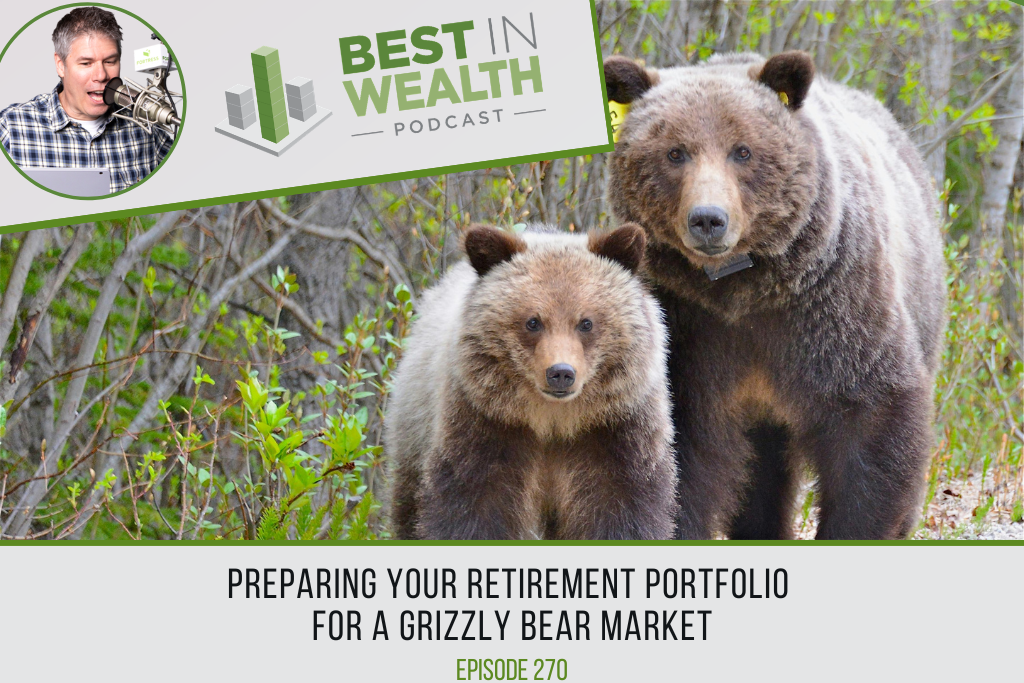
Preparing Your Retirement Portfolio for a Grizzly Bear Market
Listen to Best in Wealth Podcast Episode 270
What Every Retiree Needs to Know About Surviving a Major Market Downturn
Are you prepared for the next bear market? Market downturns are an inevitable part of investing, yet many investors do not evaluate their retirement portfolio risk until volatility strikes. Whether you are approaching retirement, already retired, or still building wealth, understanding how market corrections, bear markets, and severe market crashes affect your portfolio is critical.
In this article, we explore the history of bear markets, the importance of portfolio diversification, and the steps investors can take today to protect their retirement portfolio from future market downturns.
Outline of This Episode
- [03:34] Importance of communicating about conflict before it arises
- [06:27] Discussing market downturns and returns
- [10:16] Understanding Market Corrections
- [11:31] S&P 500 correction frequency
- [16:51] Assessing portfolio risk levels
- [18:01] Understanding risk and portfolio deviations
- [24:03] Preparing for market downturns
- [25:11] Preparing for market downturns
The Importance of Evaluating Portfolio Risk Before a Bear Market
Much like in relationships, it is best to address potential conflicts before they arise; investors address risk before markets turn volatile. Re-evaluating your comfort with risk and your portfolio's construction when things are calm puts you in the driver’s seat. Waiting until a downturn hits can leave you reactionary and vulnerable to poor decisions—like panic selling when it hurts the most.
Understanding Market Corrections, Bear Markets, and Severe Market Downturns - Grizzly Bear Markets
I break market volatility into three categories:
1. Market Corrections – The "Baby Bear."
A correction is a market drop of at least 10% from its recent high. While the news can make a big fuss about corrections, they are common and, historically, have recovered relatively quickly. The S&P 500 has seen 28 corrections since 1969—that is about one every two years. The best move during a correction is strategic rebalancing, not panic.
2. Bear Markets: A Normal Part of Long-Term Investing – The "Bear."
Bear markets are drops of 20% or more. Since 1969, they have happened eight times—about once every seven years. Bear markets are more serious than corrections and can be emotionally challenging, but they are still a normal part of the investing cycle. If you are lying awake at night during a bear market, it probably means your portfolio risk was not suited to your comfort level before the downturn.
3. Grizzly Bear Markets – The Real Threat - Major Market Crashes That Test Investors
A grizzly bear market is a severe drop of 30% or more, and these are rare but devastating. Since 1969, only three have occurred: during the oil and stagflation crisis of the ‘70s, the dot-com bubble in the early 2000s, and the 2008 financial crisis. These markets can take years to recover—some up to 91 months for a portfolio invested solely in the S&P 500.
How Portfolio Diversification Helps Protect Retirement Investments, and Why a 60/40 Portfolio Has Historically Weathered Bear Markets Better
What separates investors who successfully navigate grizzly bear markets from those who struggle? Preparation, diversification, and proper portfolio construction.
Historically, diversified portfolios containing both stocks and bonds have experienced smaller declines and faster recovery periods than portfolios invested entirely in stocks. A traditional 60% stock and 40% bond portfolio has often provided retirees with a valuable source of stability during periods of market volatility.
For retirees and those nearing retirement, maintaining an allocation to bonds and cash can serve as a financial airbag. During a bear market, retirees can draw on their safer reserves, allowing stock investments time to recover.
Questions Every Retiree Should Ask About Their Retirement Portfolio
If you are retired or planning to retire within the next decade, now is the time to evaluate your retirement portfolio and investment strategy.
Ask yourself:
- Is my retirement portfolio prepared for a major bear market?
- Can my retirement income plan withstand a prolonged market downturn?
- Do I have the appropriate mix of stocks, bonds, and cash?
- Has my financial advisor stress-tested my plan against historical bear markets and market crashes?
- How long could my portfolio support my lifestyle during a severe market decline?
Bear markets and market corrections are a normal part of investing. While grizzly bear markets are rare, they can have a significant impact on retirement portfolios. The pain is real—but so are the solutions. The good news is that investors can prepare. Taking action today by assessing portfolio risk, maintaining appropriate diversification, regularly rebalancing investments, and planning for retirement income needs can help protect your long-term financial goals and leave you sleeping soundly—no matter what the market throws your way.
Learn more about Fortress's Investment Management services
Connect With Scott Wellens
- Connect with Fortress Planning Group on LinkedIn
- Connect with Scott on LinkedIn
- Follow Scott on Twitter
- Fortress Planning Group on Facebook
- Subscribe to Best In Wealth Podcast
- View Scott's profile on Fee-Only Network and NAPFA
Podcast Disclaimer:
The Best In Wealth Podcast is hosted by Scott Wellens. Scott Wellens is the principal at Fortress Planning Group. Fortress Planning Group is a registered investment advisory firm regulated by the US Securities and Exchange Commission in accordance and compliance with securities laws and regulations. Fortress Planning Group does not render or offer to render personalized investment or tax advice through the Best In Wealth Podcast. The information provided is for informational purposes only and does not constitute financial, tax, investment or legal advice.